
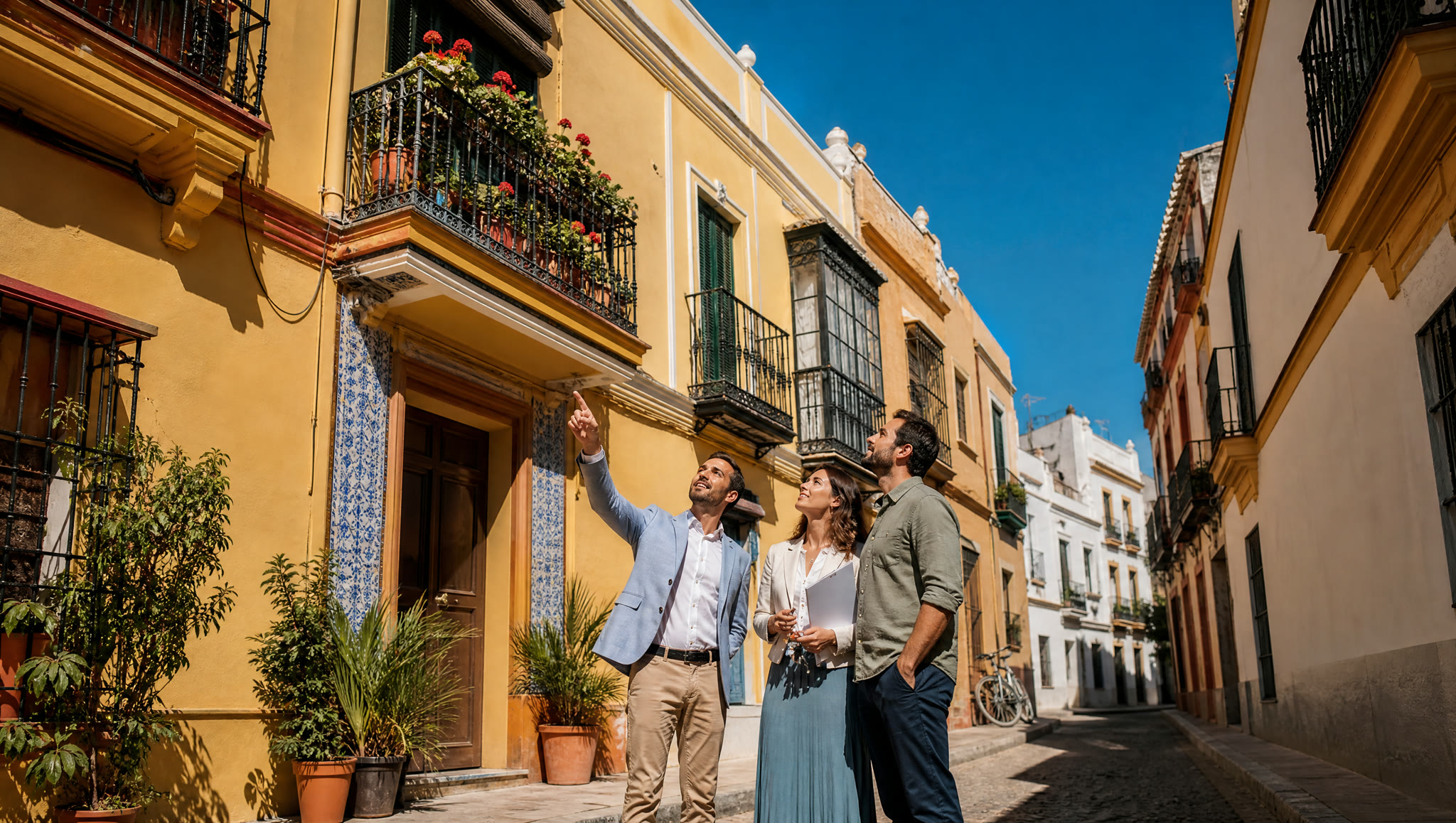
Where to Live in Sevilla: A Barrio Guide for People Who Are Actually Moving
Expatronus Team2 September 20268 min read
Eight Sevilla districts, what each one is really for, and what you give up by choosing it. With August 2026 prices, the noise register, the tourist licence cap and the walk to the metro.
If you have decided on Sevilla and now have to decide where in Sevilla, the guidebooks are close to useless. They rank neighbourhoods by how pretty they are to walk through for four days. You are choosing where to sleep on a Tuesday in July. This is that version: eight districts, what each is for, and what you give up by choosing it.
Eleven districts, and why the word barrio is slippery
The city divides itself into eleven municipal districts, and the districts divide again into barrios. When the council counted them for its housing rules it arrived at 108 barrios. In conversation people use barrio for both, so two flats advertised as Triana can be fifteen minutes apart in character and several hundred euros apart in price. Ask which street, then go and look at it.
For scale, here is what a square metre cost to buy in each district in August 2026, on the Fotocasa price index. Sale prices are not rent, but they rank the city the same way and they are published monthly: Casco Antiguo 4,328 €/m², Triana 3,983 €/m², Los Remedios 3,892 €/m², Nervión 3,473 €/m², Bellavista-La Palmera 2,490 €/m², Macarena 2,300 €/m², Norte 1,929 €/m², Este-Alcosa-Torreblanca 1,614 €/m². Top to bottom, a factor of nearly three inside one city.
Triana: the one everyone wants, and the one that moved fastest
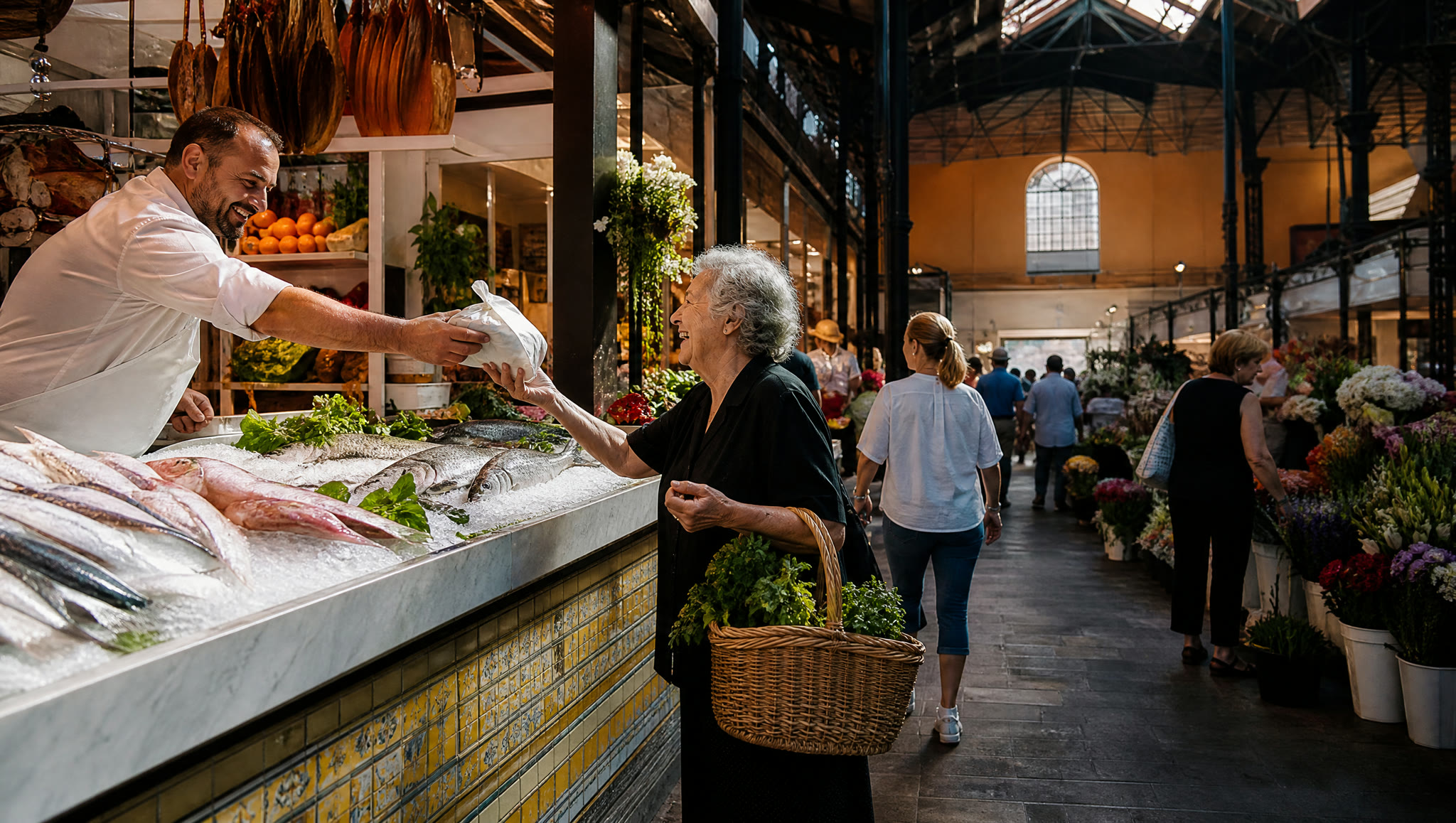
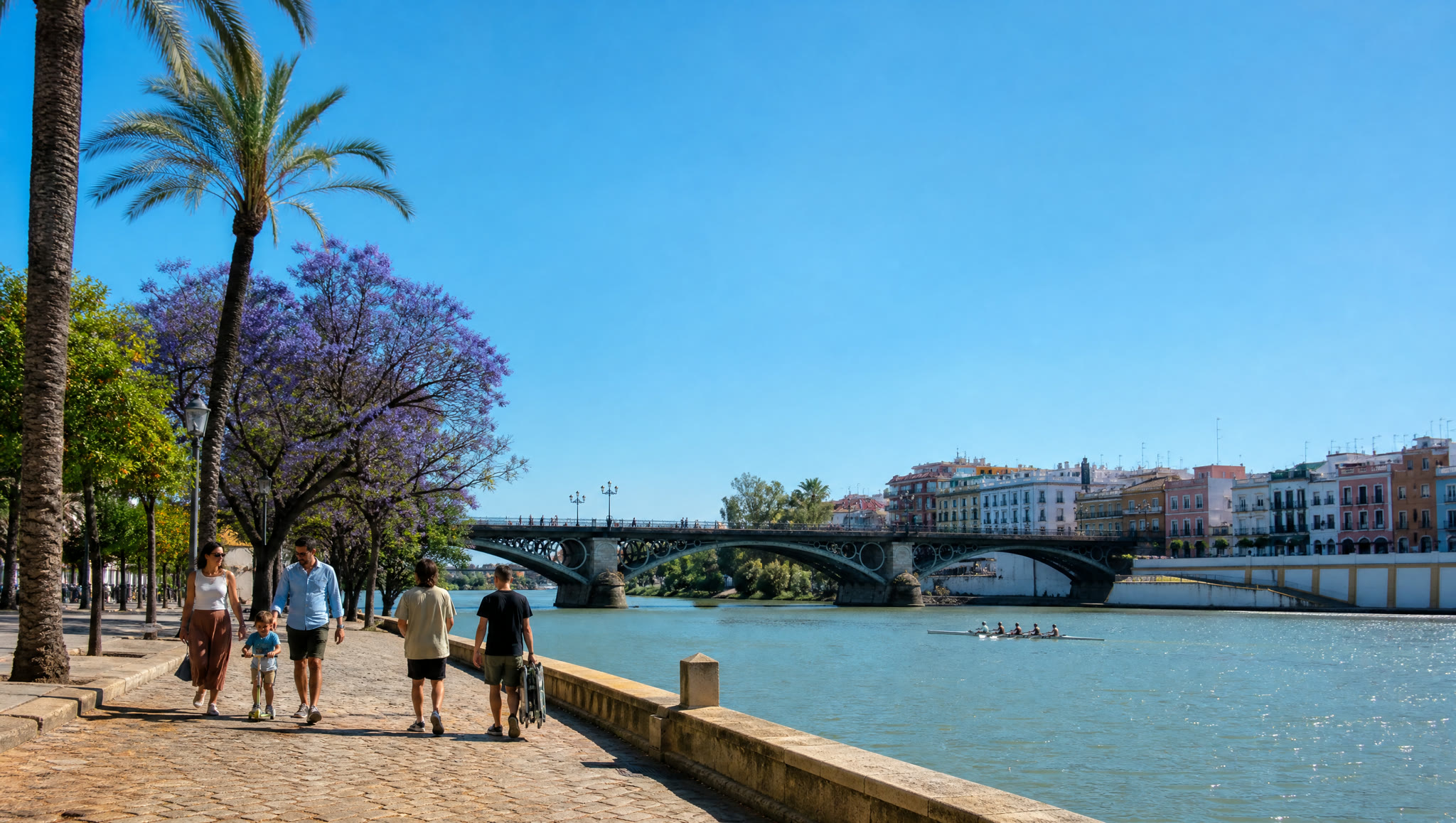
Triana sits across the Guadalquivir from the centre, close enough to walk in, far enough to feel like its own town. The Mercado de Triana on Plaza del Altozano is the anchor of daily life there, built over the remains of the Castillo de San Jorge and holding around a hundred stalls. Its produce stalls run Monday to Saturday from 9:00 to 14:30, and the bars inside stay open into the evening. Calle Betis runs along the water opposite the old city, and the Puente de Isabel II, opened in 1852, drops you into the centre on foot in a few minutes.
The catch is that everyone else worked this out too. Triana had the steepest annual price rise in the city in the year to April 2026 and is now the second most expensive zone in Sevilla after the historic centre, on local press figures from idealista. Fotocasa put the district up 11.9% in the year to August 2026. On a fixed budget, Triana is where it disappears fastest.
Two practical notes before you fall for a riverside flat. Triana has no metro station in its old core: Line 1 crosses the river at Plaza de Cuba and Parque de los Príncipes, both on the Los Remedios side. And the city keeps a public register of zonas acústicamente saturadas, areas where noise has been formally declared saturated, which includes Betis and Triana Norte. A river view and a quiet bedroom are not the same purchase.
Los Remedios: the quiet grid, and one week a year that is not quiet
Immediately south of Triana, Los Remedios is a compact grid of mid century blocks with wide pavements, orange trees and an unusually complete set of shops. It is also one of the wealthiest parts of the city: analysis of the national statistics office's household income atlas, reported locally in October 2025, put streets around Plaza de Cuba among the highest earning in Sevilla, with sharp differences from one block to the next. Prices follow, at 3,892 €/m² in August 2026.
What nobody tells you at the viewing is that the Real de la Feria, the fairground where the Feria de Abril is held, occupies the western edge of the barrio on Avenida Flota de Indias. For one week, typically in April, more than a thousand casetas go up and the funfair known as the Calle del Infierno runs beside them. That is either why you moved to Sevilla or why you will book a week away.
Nervión and San Bernardo: the practical choice
East of the old city, Nervión is where people move when the romance of a courtyard house has met its first plumbing bill. It is flat, modern, well served, and it has the transport. Sevilla-Santa Justa, the main railway station and high speed hub, sits on Avenida Kansas City at the district's edge, and Line 1 stops at San Bernardo, Nervión and Gran Plaza. At 3,473 €/m² in August 2026 it is cheaper than the three districts above it and rose more slowly, up 5.8% on the year.
The trade is atmosphere. Nervión is a good place to live and a dull place to show visitors. If your weekend plan is a plaza and a long lunch, you will be commuting to it.
Casco Antiguo: beautiful, and the hardest place to live normally
The historic centre is the most expensive district in the city, 4,328 €/m² in August 2026, and the one where daily logistics are hardest. Streets are narrow, parking is close to theoretical, deliveries arrive on foot. It is also under the most tourist pressure. In October 2024 the council approved a cap of 10% of the family homes in each of the 108 barrios for viviendas de uso turístico, the licensed short lets, and its notice states that most Casco Antiguo barrios and the most traditional parts of Triana can take no more.
If you want the centre without the worst of it, look north of the cathedral rather than around it. The Alameda de Hércules, laid out in 1574 and reworked in 2008, sits in the San Lorenzo barrio on the Macarena border and has terraces, music venues and actual residents. It is loud at night the way a busy square is loud, so read the street before the flat.
⚠️
Two public registers are worth ten minutes before you sign anything in the centre or by the river. The city publishes its list of zonas acústicamente saturadas, which currently names about a dozen areas including Betis, Triana Norte and Reina Mercedes, and the planning authority publishes the tourist licence limits per barrio. Both are free to check and both describe how a street behaves at midnight.
Macarena: the value case, with roadworks attached
North of the centre, Macarena is where many people who wanted Casco Antiguo actually end up. It is genuinely central, it has its own life rather than a visiting one, and at 2,300 €/m² in August 2026 it is roughly half the price of the district it borders. Rises there have been mild, 4.7% on the year, in a city where the Norte district jumped 22.2% over the same period.
The current friction is construction. Metro Line 3 is being built through the north of the city, and in February 2026 the bus operator rerouted several lines around the works on San Juan de Ribera from the second of March. That is the honest version of a value barrio: you are paid in cheaper rent to live beside the improvement while it is still a hole in the road.
Green space is unevenly spread and it should weigh more heavily here than it usually does. The Parque de María Luisa, 340,000 square metres donated to the city in 1893 and now holding the Plaza de España, anchors the south. The Parque del Alamillo, 120 hectares between the Isla de la Cartuja and San Jerónimo, opens daily from 7:00 to 22:00. In a city where summer afternoons are unusable outdoors, ten minutes from one of these is worth more than a second bedroom.
Bellavista, La Palmera and the south
South of the centre, Bellavista-La Palmera runs along wide avenues towards the river's southern bend, and it is the compromise many families make: lower buildings, more trees, more parking, 2,490 €/m² in August 2026 and the slowest growth of any district here at 3.3%. It holds the university area around Reina Mercedes, which is on the city's saturated noise register, so the calm is not uniform. The cost is time: this is a car and bus part of Sevilla, and the further south you go the more it behaves like a suburb.
Sevilla Este and the Norte district: space for the money
If the priority is square metres, the two ends of the city answer it. Este-Alcosa-Torreblanca, which everyone calls Sevilla Este, was the cheapest district here in August 2026 at 1,614 €/m², and Norte, which includes San Jerónimo and Pino Montano, was 1,929 €/m². Both give you newer buildings, lifts, parking and rooms a centre flat cannot match at the price.
Both also live at the end of a bus route. A second metro line east to west through Sevilla Este and Santa Justa has been planned for years and is not built. Before taking a cheaper flat out here, do the commute once at half past eight in the morning, not at noon on a Saturday.
Three things that decide this more than the barrio does
- The heat. At the airport weather station the average daily maximum is 36.0 °C in July and 35.5 °C in August, on AEMET's 1981 to 2010 normals. Orientation, shutters, a courtyard and working air conditioning change your summer more than the postcode does.
- The metro is one line. Line 1 runs Ciudad Expo to Olivar de Quintos, 21 stations, 06:30 to 23:00 Monday to Thursday and later at weekends. If your daily journey is not near it, you are on a bus.
- Two weeks a year rearrange the city. Semana Santa and the Feria change which streets are passable. Ask the landlord what the block is like during both.
How to test a barrio in one afternoon
- Walk the street at 22:00 on a Friday, not at 11:00 on a Wednesday.
- Check the address against the city's saturated noise zones and the tourist licence limit for that barrio.
- Do the actual commute, at the actual hour, on the actual bus.
- Find the nearest market, health centre and school on foot from the front door.
- Ask what happens in the street during Semana Santa and the Feria.
Sevilla is small enough that no district is truly far from another, and different enough between them that the wrong pick still feels like the wrong city. Get the street right and the rest of it, the light, the food, the pace, is already waiting.
💡
Before you go: opening hours, prices and festival dates change, and places close, everything here was checked when this article was written, but it is always worth confirming directly before you make the trip. Planning a move to Spain? We can match you with specialists who know the city.
💡
Disclaimer: The information in this article is for general informational purposes only and does not constitute legal, tax, or financial advice. Laws and regulations change frequently, always verify with official sources and consult a qualified professional before making any decisions. Contact our specialists or start your free assessment for personalised guidance.
You might also like
Recommended for You
8 min read
School Enrolment in Spain: the Points Race in March, the Capacity Queue in September
A school place in Spain is guaranteed. The school is not. Admission is decided by a points score in a spring window that closes six months before term, and arriving later puts you on a different route entirely.
Expatronus Team3 Sept 2026
Read
8 min read
Health Insurance for a Spanish Visa: The Four Conditions That Decide It
Most rejected insurance certificates fail on one of four things: the insurer, a copayment, a waiting period, or the dates. Here is what a Spanish consulate is checking, plus the two public routes and what cover actually costs.
Expatronus Team2 Sept 2026
Read
8 min read
Spanish Citizenship by Residence: Which Clock Applies to You
Ten years, five, two or one: the qualifying period for Spanish nationality depends on who you are, not how settled you feel. The four routes, the two exams, and the deadlines at both ends of the file.
Expatronus Team2 Sept 2026
Read
Ready to start your
Spanish journey?
Our experts guide you through every step — from visa selection to settled life in Spain.
No commitment · No credit card · Results in 24 hours