
Where to Live in Valencia: Six Barrios and What Each One Costs You
Expatronus Team25 August 20268 min de lectura
Russafa, El Cabanyal, Benimaclet, Patraix, Extramurs and Ciutat Vella — what each barrio is actually like to live in, what it rented for in 2026, and the trade-off nobody mentions on the viewing.
Deciding to move to València is the easy part. Deciding where in València takes considerably longer, and most of what is written about the city was written for someone spending four days here, not for someone about to sign a twelve-month contract. This is a look at six areas people actually land in — what each is like on a Tuesday morning rather than a Saturday night, roughly what it costs, and what you give up by choosing it.
València is organised into distritos (districts), each containing several barrios (neighbourhoods). Locals talk in barrios; rent statistics are published by district. The mental map that helps most is the Jardí del Túria: after the catastrophic flood of 1957 the river was diverted south of the city, and the empty bed became a park running roughly nine kilometres through the middle of València, crossed by eighteen bridges and opened in 1986. Nearly everything below sits within a short ride of it, and it is how residents genuinely move around — running, cycling, walking a child to school — rather than along the traffic.
On money: the housing observatory at the Universitat Politècnica de València put the average advertised rent for a whole flat in the city at about €1,780 a month in the second quarter of 2026, some 9% above the same quarter of 2025 and close to double the €938 recorded in 2019. Every district figure below comes from that same quarterly report and covers flats of all sizes, so read them as a ranking rather than as a quote for the flat you will actually be shown.
Russafa: the one everybody has heard of
Russafa (Ruzafa in Spanish) sits just south of the main railway station, inside the L'Eixample district, and the city's own tourism office describes it as the most multicultural and bohemian part of València. The Mercat de Russafa on Plaça del Baró de Cortés is the daily anchor — a 1962 hall whose façades were repainted in gradient colours in 2010 — and its hours are worth checking rather than assuming: with effect from 22 June 2026, while energy-efficiency works continue, the Ajuntament lists it as open Monday to Friday from 7.30 to 14.00 and Saturdays from 7.30 to 15.00, not the Monday-to-Saturday morning printed in older guides. On the barrio's southern edge, Parc Central adds 110,000 m² of park in its first phase, open 7.30–21.30 from March to October and 7.30–20.30 from November to February.
The trade-off is noise, and it is now official. On 30 April 2026 the city council voted to declare Russafa a zona acústicamente saturada — an acoustically saturated zone — covering eighteen streets plus a buffer area around them, and it took effect on 20 May 2026. In practice that suspends new licences for hospitality venues inside the zone, stops new permissions for amplified music, and blocks new terraces on municipal land. Useful if you live there; less so if you were planning to open something. L'Eixample was also the second most expensive district in the city, averaging around €2,175 a month. Russafa suits you if you want to walk everywhere and do not mind a Thursday that sounds like a Saturday — if you sleep lightly, ask which way the bedroom faces before you sign.

El Cabanyal: the beach barrio
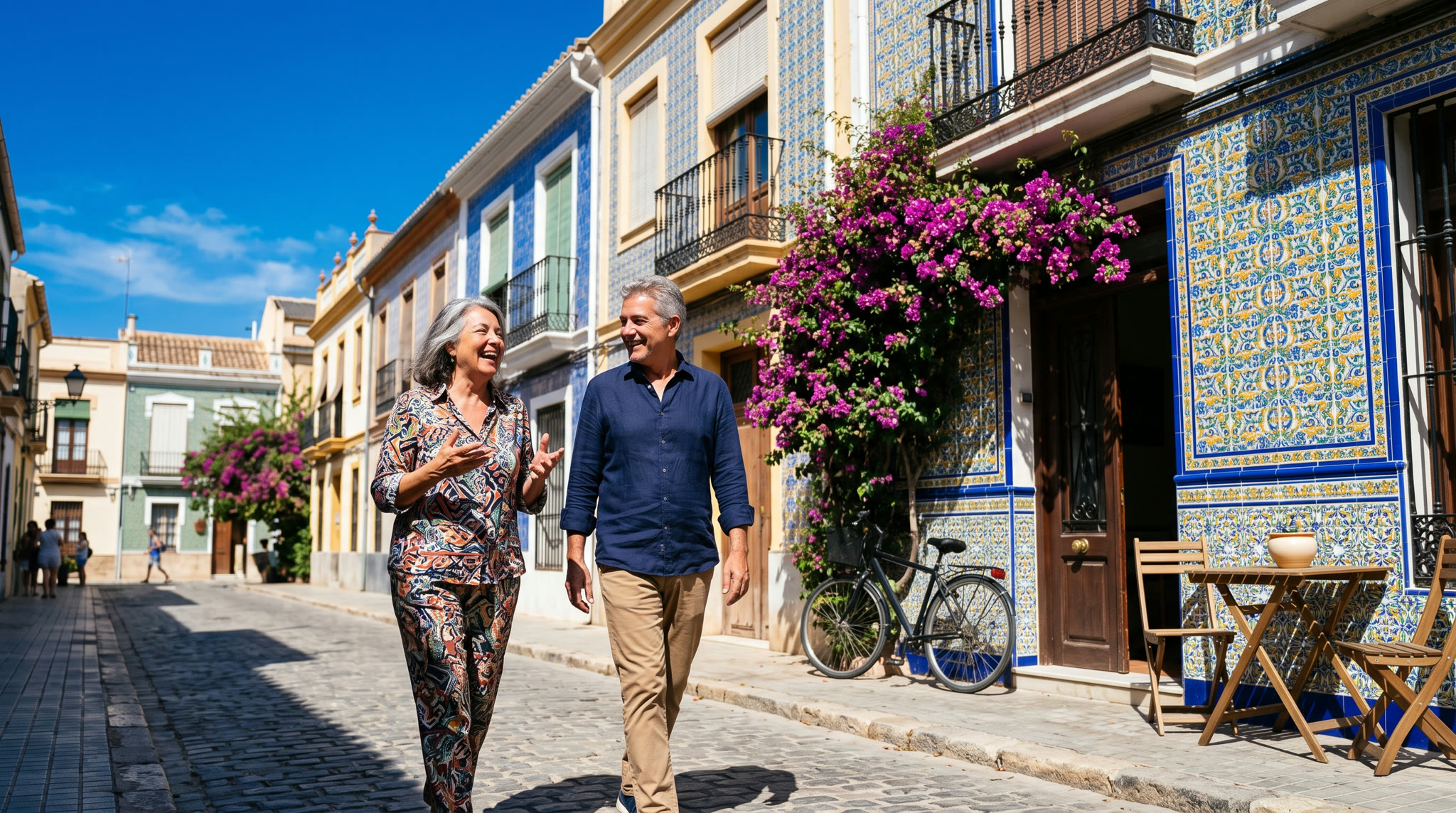
El Cabanyal, in the Poblats Marítims district, was a fishermen's quarter before the city grew around it, and it still reads that way — low houses with coloured ceramic-tile façades, streets running straight down to the sand. The Mercat del Cabanyal on Carrer de Justo Vilar is listed by the Ajuntament as open Monday to Saturday from 7.30 to 15.00, with an additional open-air market on Thursdays from 9.00 to 14.00, and trams on lines 4, 6 and 8 serve the beach stops — Neptú, Canyamelar, Platja les Arenes and Platja Malva-rosa — meeting the metro at Empalme, Benimaclet and Marítim. Two things to weigh. In 2026 the Platja de la Malva-rosa kept its Blue Flag while the Platja de les Arenes immediately south — the Cabanyal's own stretch, closer to the port — did not, after its water was graded 'good' rather than reaching the required standard of excellence. And this barrio has been the sharpest edge of the city's short-let boom: average rent across Poblats Marítims reached roughly €1,602 a month in the second quarter of 2026, despite the district's working-class history. You are buying a short walk to the sea and paying for it in commuting time and in competition for flats.
Benimaclet, Patraix and Extramurs: the quieter, cheaper side
North-east of the centre, Benimaclet was farmland and an agricultural village long before it was a barrio, and the old core — pedestrian streets, a church square, low houses — is still perfectly legible. The Ajuntament has published its own walking guide to the area, which tells you something about how the city regards it. It sits between València's two large university campuses, which is why so many flats are shared, why the bars are cheap, and why the rhythm of the year follows the academic calendar. Average district rent came in around €1,506 a month, below the city figure, and the interchange at Benimaclet is one of the better-connected points on the Metrovalencia network, with metro and tram meeting in the same station.
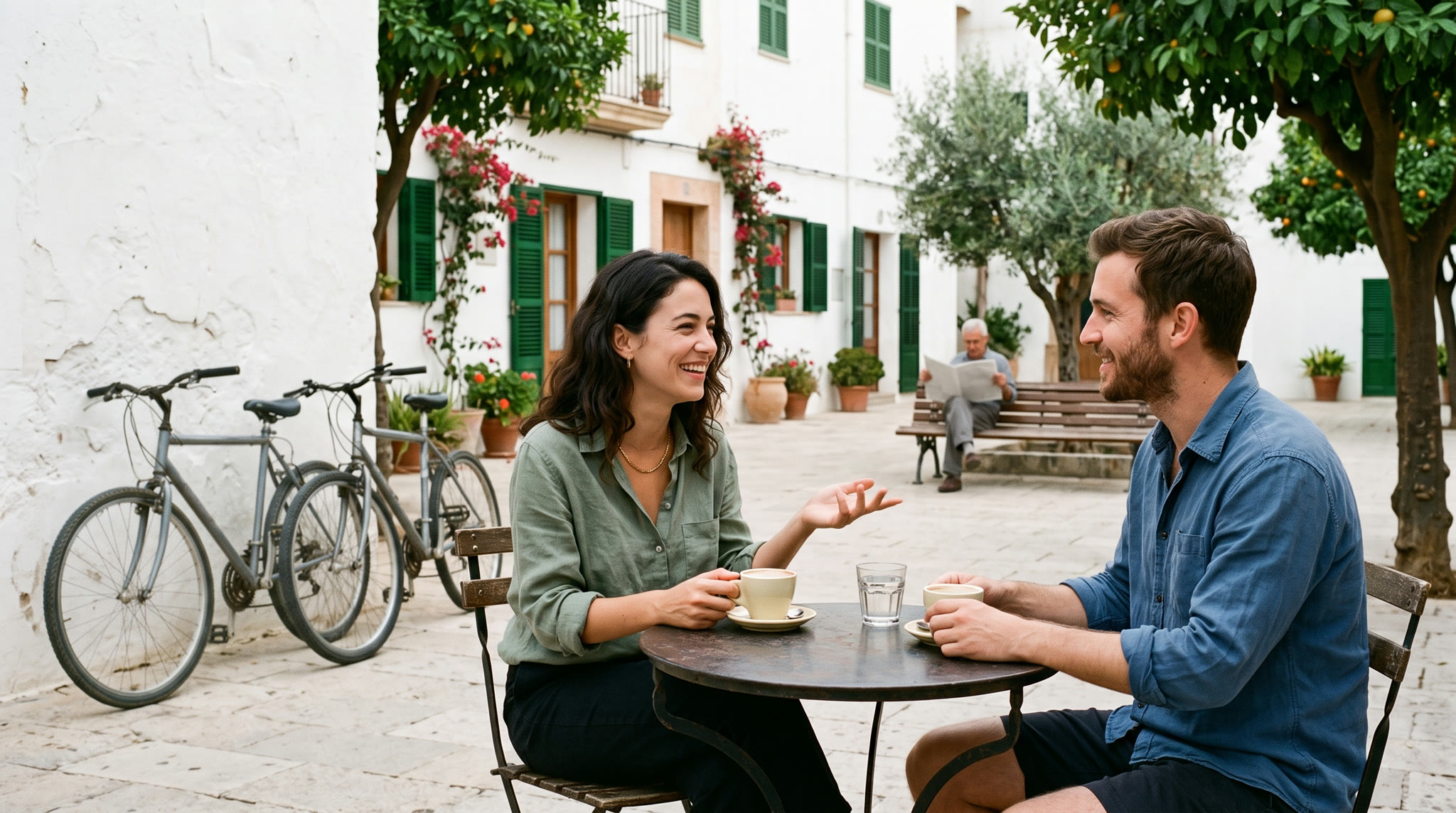
Benimaclet is the clearest case of a rule that holds across València: the barrios that feel like villages are the ones that were villages, absorbed as the city expanded outwards. That is also the honest warning. A student-heavy barrio is loud in October and half-empty in August, the housing stock is older, and 'full of character' frequently means no lift, single glazing and a boiler somebody should have replaced a decade ago. Look hard at the building, not only at the street.
Patraix was the least expensive district in the city for rent in the second quarter of 2026, averaging about €1,365 a month. It is residential in the plainest sense — schools, playgrounds, an old village centre swallowed by the grid, very little nightlife — with three Metrovalencia stops of its own at Sant Isidre, Patraix and Safranar. If your priority is space per euro on a quiet street, this is where the arithmetic works; if you want to walk home from dinner in the old town, it is not. Extramurs — literally 'outside the walls' — wraps the western side of the old town and contains the barrios of El Botànic and Arrancapins, among others, at an average of roughly €1,682 a month: meaningfully less than L'Eixample or Ciutat Vella for what is often only a few minutes' more walking. El Botànic takes its name from the Jardí Botànic de la Universitat de València on Carrer de Quart, a working university garden with a full programme of exhibitions and summer concerts. Its everyday market, the Mercat de Rojas Clemente, is a live illustration of why you check before setting out: the Ajuntament closed it for works through August 2026, with reopening scheduled for 3 September 2026.
Ciutat Vella and El Carme: worth thinking twice about
Ciutat Vella is the historic centre, made up of six barrios including El Carme, and it is the part almost everyone falls for on a first visit. The Mercat Central — the great hall on Plaça del Mercat completed in 1928, open Monday to Saturday from 7.30 to 15.00 — is a genuinely good reason to want to live nearby. But the district averaged about €1,968 a month, and it carries the city's heaviest concentration of tourist flats; since 2024 the council has been working to remove tourist-let use from Ciutat Vella buildings that also contain homes, precisely because residents have been leaving. Plenty of people live here happily. Before signing anywhere central, though, ask the landlord directly whether other flats in the building are let to tourists and confirm the property is registered for residential use — València's rules on tourist flats changed again in 2026, enforcement is active, and a building in the middle of that argument is not where you want a twelve-month contract.
What actually decides it
- Your commute measured in changes rather than minutes — one tram and one metro across the city is fine; two changes each way stops being fine by November.
- Which market you would realistically use, and whether it is open when you finish work: most of València's municipal markets shut in the early afternoon.
- Noise. Ask which way the bedroom faces, and whether there are terraces on the pavement below.
- Fallas. The festival typically runs from 15 to 19 March each year, with a mascletà fired daily in the Plaça de l'Ajuntament through the first nineteen days of the month. If your street hosts a falla, that week is extraordinary and you will not sleep through it.
- The building rather than the barrio: lift, glazing, orientation and heating decide more of your daily comfort than the postcode does.
If you are torn between two of these and cannot separate them, spend a weekday in each — once mid-morning, once at eleven at night. The difference between barrios in València is rarely about how pretty they are. It is about what time the street goes quiet.
💡
Before you go: opening hours, prices and festival dates change, and places close — everything here was checked when this article was written, but it is always worth confirming directly before you make the trip. Planning a move to Spain? We can match you with specialists who know the city.
💡
Disclaimer: The information in this article is for general informational purposes only and does not constitute legal, tax, or financial advice. Laws and regulations change frequently — always verify with official sources and consult a qualified professional before making any decisions. Contact our specialists or start your free assessment for personalised guidance.
También te puede gustar
Recomendado para ti
8 min de lectura
School Enrolment in Spain: the Points Race in March, the Capacity Queue in September
A school place in Spain is guaranteed. The school is not. Admission is decided by a points score in a spring window that closes six months before term, and arriving later puts you on a different route entirely.
Expatronus Team3 Sept 2026
Leer

8 min de lectura
Health Insurance for a Spanish Visa: The Four Conditions That Decide It
Most rejected insurance certificates fail on one of four things: the insurer, a copayment, a waiting period, or the dates. Here is what a Spanish consulate is checking, plus the two public routes and what cover actually costs.
Expatronus Team2 Sept 2026
Leer

8 min de lectura
Where to Live in Sevilla: A Barrio Guide for People Who Are Actually Moving
Eight Sevilla districts, what each one is really for, and what you give up by choosing it. With August 2026 prices, the noise register, the tourist licence cap and the walk to the metro.
Expatronus Team2 Sept 2026
Leer
¿Listo para empezar tu
aventura española?
Nuestros expertos te guían en cada paso, desde la selección del visado hasta asentarte en España.
Sin compromiso · Sin tarjeta de crédito · Resultados en 24 horas