

Arraigo in Spain: The Five Routes That Stayed Open
Expatronus Team26 August 20268 min de lectura
Spain's extraordinary regularisation closed on 30 June 2026 after almost 1.2 million applications. The ordinary arraigo routes never closed, and since May 2025 they ask for two years in Spain rather than three. Here is how the five of them differ, and which one your situation points at.
If you are living in Spain without a residence permit, the past few months have felt like a door opening and closing very fast. This guide is for you, and for anyone advising a friend, a partner or an employee in that position. It sets out what the extraordinary regularisation of 2026 actually was, why its closing does not leave you with nothing, and how the five ordinary arraigo routes differ from one another. By the end you should know which route your own situation points at, and what evidence it typically rests on.
What closed on 30 June, and what did not
Royal Decree 316/2026 opened a single regularisation window that ran from 16 April to 30 June 2026. It asked for far less time in the country than the ordinary routes do: arrival in Spain before 1 January 2026, five months of continuous stay, a clean criminal record, and one of several work, family or vulnerability conditions. The response was enormous. The Ministry of Inclusion, Social Security and Migration reported 1,174,978 applications by the close of the window, close to four in five of them filed under the extraordinary arraigo heading and the rest by people who had applied for international protection. By 30 June the process had already put 159,097 additional people onto the Social Security rolls, concentrated in hospitality, retail, administrative services and construction.
That deadline was written into the decree itself and it has not reopened. What continues is narrower and easy to miss. If you filed on time and the administration comes back asking for a document that was missing, wrong or incomplete, corrections can still be handed in on paper: Correos kept 383 offices open across Spain for that purpose until 30 September 2026, without an appointment, and only for files that were already submitted.
⚠️The extraordinary window is closed and the decree left no room to extend it. If someone offers to file a late application under Royal Decree 316/2026 for a fee, there is nothing left to file. The routes below are the ones that are genuinely open.
The ordinary route has a name: arraigo
Arraigo means putting down roots, and in Spanish immigration practice it describes a residence authorisation granted on exceptional grounds to someone already living in the country. It is not new. What changed is its shape. The current Reglamento de Extranjería, approved as Royal Decree 1155/2024 and in force since 20 May 2025, rebuilt it into five separate figures and cut the general stay requirement from three years to two. Arraigo social also stopped depending on proof of past informal work, which is where a lot of honest applications used to fall apart.
All five carry the right to work, for an employer or for yourself, and in most cases the first authorisation runs for one year. What comes after differs by route, and the usual direction of travel is a move into an ordinary residence and work authorisation once your situation supports one.

Arraigo social: two years plus a link or a report
This is the route most people mean when they say arraigo. Under current rules it typically asks for two years of continuous stay in Spain, no criminal record in Spain or in any country you have lived in over the last five years, and then one of two anchors: a family link to a spouse, registered partner or first-degree relative who is legally resident here, or a favourable integration report from your autonomous community or your town hall. That report is the discretionary heart of the file. It is written by the administration closest to you, it weighs your actual life in the municipality rather than your paperwork alone, and a thin one is difficult to argue with afterwards.
Arraigo sociolaboral: two years plus a real job offer
Same two year clock, same criminal record rule, but the anchor is employment instead of a report. The ministry's own information sheet puts the threshold at a job offer of at least twenty hours a week in total, paying no less than the statutory minimum wage or whatever the applicable collective agreement sets. Those twenty hours can be assembled from more than one contract, which matters in seasonal work and in sectors where part-time is the norm. The authorisation runs for a year, and extending it generally means showing that you are working, or genuinely looking and registered with the public employment service.
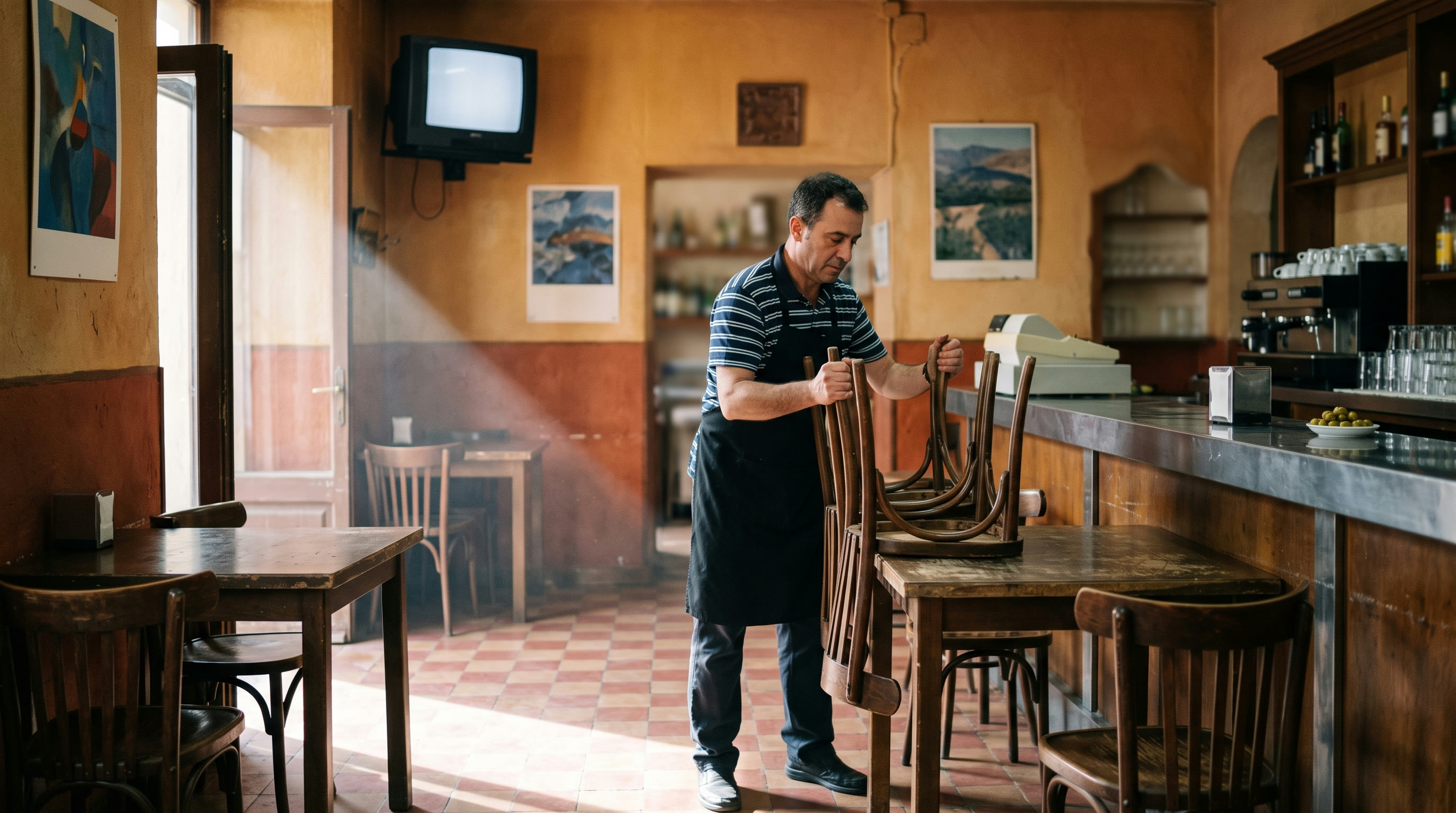
Twenty hours a week is a lower bar than a full contract, and it was written that way on purpose. Hospitality alone accounted for close to 39,000 of the new Social Security registrations during this year's regularisation, and a great deal of that work is split shifts, weekends and two employers rather than one clean nine to five. What the file needs is a real offer on real terms, not a favour written on headed paper.
Arraigo socioformativo: two years plus training
The newest of the five. Instead of a job or a report, the anchor is enrolment in recognised training: post-compulsory secondary education, professional certificate courses, adult compulsory education, or public employment service training aimed at occupations on the official catalogue of hard-to-fill roles. It is the route for someone whose two years in Spain are solid but whose work history is not, and whose realistic next step is a qualification rather than a contract. Renewal turns on the course itself, either moving up to the second year of a multi-year cycle or finishing it and registering as a jobseeker.
Arraigo familiar: no waiting period, and a trap worth knowing
This one asks for no minimum stay at all, which makes it the fastest route on paper. It is also the narrowest. As the regulation now stands it is aimed at the parent or guardian of a minor who holds the nationality of another European Union state, of the European Economic Area or of Switzerland, where you live with the child and support them, and at people caring for an EU, EEA or Swiss national with a disability. The resolution period the ministry gives for it, as for the other arraigo figures, is three months from the day after the file reaches the body handling it.
⚠️If your child is a Spanish national, arraigo familiar is no longer the route. That situation now runs through the separate regime for family members of Spanish citizens, and filing the wrong application costs months. A number of guides published since the reform still describe the old position, so check the date on anything you read about this, including this article.
Arraigo de segunda oportunidad: for permits that lapsed
The fifth figure is for people who were legal here and fell out of status. In broad terms it looks for a residence authorisation held during the two years before the application, one that was not renewed for reasons other than public order, public security or public health, alongside the same two year stay and the same criminal record rule. It exists because the most common way to become undocumented in Spain is not arriving without papers. It is losing the ones you had, usually through a renewal that went wrong or a job that ended at the wrong moment.
What two years in Spain looks like on paper
The clock is the part applicants underestimate. Continuity is proved with a documentary trail rather than one certificate, and the historic padrón certificate from your town hall is its spine. That is why registering at your municipality on the day you arrive matters even when nothing else about your status is settled: the padrón records where you live, it does not ask about your permit, and years later it is the only thing that can date your presence. Medical cards, school enrolment, bank movements, rent receipts, transport passes and payslips fill the gaps between entries. On absences, the ministry's information sheets for arraigo social and arraigo socioformativo set the limit at 90 days outside Spain during the qualifying period. Long trips home are the quiet way a file loses its second year.
The money question
Economic means are measured against the IPREM, the reference index Spanish administrations use for this instead of the minimum wage. It has been frozen for several years and sits at 600 euros a month in 2026, which works out at 7,200 euros across twelve payments. For arraigo social the ministry sets the reference at 100 per cent of that figure for the applicant, and where the file rests on a resident relative rather than an integration report, that relative is generally expected to cover the same amount for themselves on top. Sociolaboral files answer the question a different way, through the contract itself.
Sequence beats speed
In practice the preparation takes longer than the decision. An integration report has its own queue at the town hall. A criminal record certificate from your country of origin typically needs legalisation or an apostille and a sworn translation, and both that certificate and the report expire. So the order matters more than the pace: assemble the padrón history first, because it decides which routes are even available to you, then the anchor your route rests on, then the certificates last so they are still valid when the file goes in.
- A historic padrón certificate covering the whole qualifying period, requested from the town hall where you are registered
- Criminal record certificates from Spain and from every country you have lived in during the last five years, legalised or apostilled and officially translated
- The anchor for your route: the integration report, the job offer, the training enrolment or the family documentation
- A valid passport, with copies of every page including the empty ones
- The everyday evidence behind the padrón: medical card, school enrolment, rent receipts, transfers, transport passes
Where paying for help actually pays
Two things decide most arraigo files: choosing the right route the first time, and the quality of the evidence behind the two year claim. Both are cheap to get right at the start and expensive to repair after a refusal, because a rejected file leaves a trace while the clock keeps running. If you are not certain which of the five fits your situation, that is the conversation to have before you book anything else. You can start a free relocation assessment and we will match you with an immigration lawyer who works on these cases regularly, rather than a generalist meeting one for the first time.
💡
Disclaimer: The information in this article is for general informational purposes only and does not constitute legal, tax, or financial advice. Laws and regulations change frequently — always verify with official sources and consult a qualified professional before making any decisions. Contact our specialists or start your free assessment for personalised guidance.
También te puede gustar
Recomendado para ti

8 min de lectura
School Enrolment in Spain: the Points Race in March, the Capacity Queue in September
A school place in Spain is guaranteed. The school is not. Admission is decided by a points score in a spring window that closes six months before term, and arriving later puts you on a different route entirely.
Expatronus Team3 Sept 2026
Leer

8 min de lectura
Health Insurance for a Spanish Visa: The Four Conditions That Decide It
Most rejected insurance certificates fail on one of four things: the insurer, a copayment, a waiting period, or the dates. Here is what a Spanish consulate is checking, plus the two public routes and what cover actually costs.
Expatronus Team2 Sept 2026
Leer

8 min de lectura
Where to Live in Sevilla: A Barrio Guide for People Who Are Actually Moving
Eight Sevilla districts, what each one is really for, and what you give up by choosing it. With August 2026 prices, the noise register, the tourist licence cap and the walk to the metro.
Expatronus Team2 Sept 2026
Leer
¿Listo para empezar tu
aventura española?
Nuestros expertos te guían en cada paso, desde la selección del visado hasta asentarte en España.
Sin compromiso · Sin tarjeta de crédito · Resultados en 24 horas